

Article: What to Look for in an Eyelid Cream That Actually Reduces Puffiness and Fine Lines
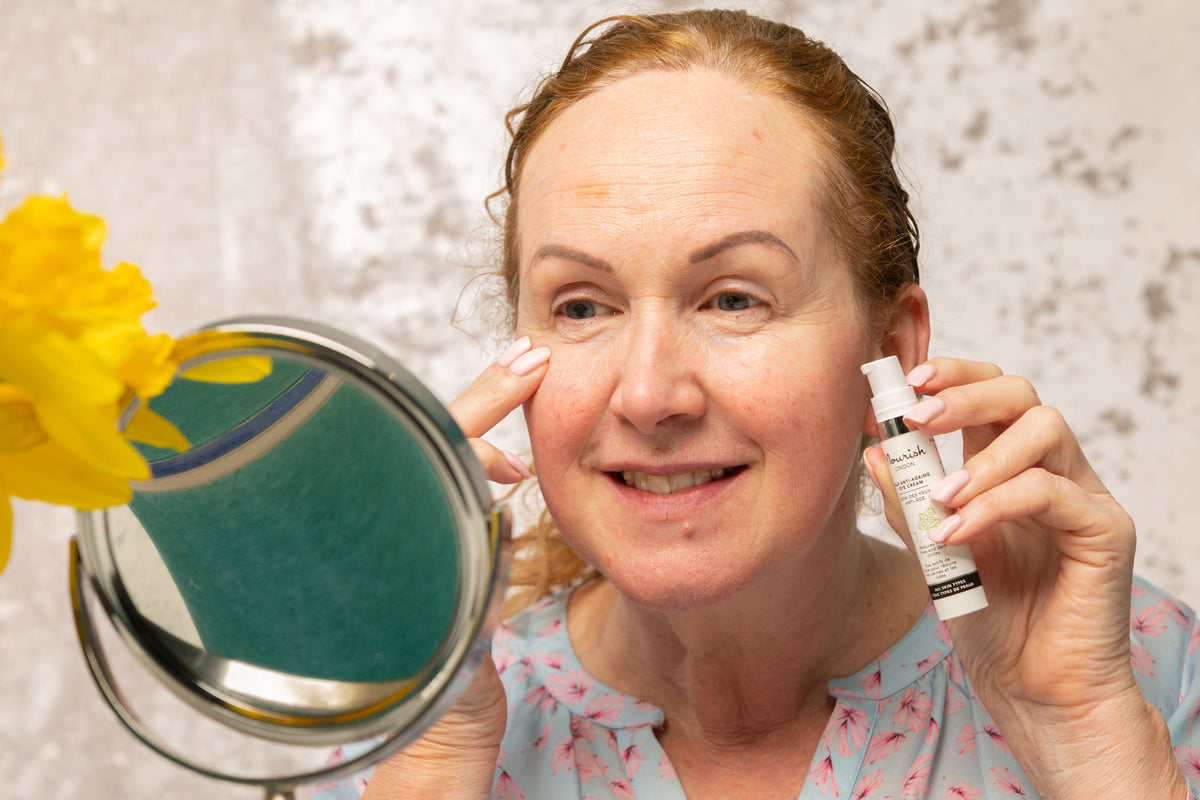
What to Look for in an Eyelid Cream That Actually Reduces Puffiness and Fine Lines
What to Look for in an Eyelid Cream That Actually Reduces Puffiness and Fine Lines
Many products labeled for the eye area are formulated for the under-eye and orbital region rather than the movable eyelid itself. That skin is thicker and more forgiving, with dark circles and puffiness as its main concerns. When you apply those formulas to your upper lid, you're asking a product built for one type of skin to perform on something structurally different, and the formulation differences are significant enough that the mismatch often shows up as stinging, pilling, or no visible result at all.
Eyelid skin is roughly 0.5mm thick, making it one of the thinnest patches on the entire body. It has almost no subcutaneous fat beneath it, very few oil glands, and it moves constantly from blinking and facial expressions. That's not a minor distinction. It changes which ingredients belong there, which textures work, and what outcomes are actually realistic.
After years of curating clean, natural skincare at High Street Shoppe, the same pattern keeps showing up: someone buys something labeled as an eye cream, applies it to their lids, and wonders why it stings, pills, or delivers nothing. This is a common experience among people shopping for targeted eye-area care rather than an isolated one. This guide breaks down what makes eyelid skin unique, which ingredients are genuinely effective and safe for it, and how to find an eyelid cream that works rather than one that just promises to.
Why your eyelid skin is in a category of its own
The anatomy that changes everything
Eyelid skin is among the thinnest on the face, with almost no fat below it and very few oil glands to keep it naturally moisturized. That leaves almost no buffer between the surface and the eye itself. A moisturizer your cheeks absorb comfortably can cause stinging, swelling, or full-blown contact dermatitis when applied even millimeters closer to the eye.
The constant movement matters too. Blinking and facial expressions create cumulative mechanical stress that thicker skin handles easily. On the eyelid, that same movement means products need to sit lightly, absorb cleanly, and not migrate toward the waterline throughout the day. Any formula that's too rich or too occlusive fails that test quickly.
Under-eye cream vs. eyelid cream: not the same product
Most eye creams are designed for the orbital bone area below the eye. That skin is thicker, and the primary concerns there are dark circles, puffiness from fluid retention, and fine lines. The upper eyelid is structurally different and needs a lighter, more minimal formula with tighter irritation controls.
Heavy or occlusive creams applied to the eyelid can cause milia, clog follicles along the lash line, or migrate into the eye during the day. Knowing this distinction alone filters out a large portion of what's currently marketed as an "eye cream." If the label doesn't specifically mention the eyelid or confirm testing for periocular use, it's worth assuming the formula was designed for the tissue below it rather than the lid itself.
The ingredients worth looking for in an eyelid cream
Peptides: the quieter path to firming
Peptides signal the skin to produce more collagen, which makes them one of the most useful ingredients for addressing crepiness and mild laxity on thin eyelid skin. Clinical studies on multi-peptide eye formulas have shown measurable reductions in the number, depth, and volume of fine-line deformations. They work gradually, but without the irritation risk that stronger actives carry in this zone.
The most studied types for periorbital skin include Matrixyl-type peptides (particularly palmitoyl pentapeptide-4), copper peptides like GHK-Cu, and Argireline (acetyl hexapeptide-8), which targets expression-related lines specifically. If eyelid tightening is your goal, a formula built around one or more of these is a reasonable starting point with genuine clinical grounding behind it.
Hyaluronic acid for hydration without the weight
Hyaluronic acid draws water into the skin and holds it there. On the eyelid, where dryness accelerates the appearance of fine lines and crepe texture, even a lightweight hyaluronic acid formula can make a visible difference within days to a few weeks of consistent use. Its evidence is strongest for hydration and surface smoothness, not structural tightening, but that's exactly what dehydrated eyelid skin needs most.
The key is texture. A heavy cream with hyaluronic acid can still be problematic on the lid. Look for a lightweight serum or eye fluid rather than a dense cream, and you get the hydration benefit without the occlusion risk. It's a more honest ingredient for this area than many of the dramatic claims around it suggest, but used correctly, it consistently delivers.
Calendula and botanical soothers for reactive eyelid skin
Calendula has shown improvements in skin hydration and barrier recovery in clinical research, and it's gentle enough that it's commonly included in formulas made for the periocular area. That said, calendula comes from the daisy family, and it can cause allergic reactions in susceptible individuals, anyone with plant-based allergies in that group should patch test before applying near the eye. Used appropriately, it's a reasonable soothing option for sensitive eyelid skin. Oat extract and green tea are commonly used calming botanicals that serve a similar purpose; if asserting periocular benefits, patch testing is always recommended.
Brands like Neal's Yard Remedies and Evolve Organic Beauty, carried at High Street Shoppe, build their eye formulas around this kind of phytochemical-rich, low-irritant approach. One important note on retinol: it has the strongest clinical evidence for periorbital laxity overall, but it should not be applied directly to upper eyelid skin. It's a frequent cause of contact dermatitis in that area and is better limited to the bony orbital rim if used at all.
What sensitive and eczema-prone eyelids need you to avoid
The short list of common irritants
Fragrance is the single most common trigger for eyelid contact dermatitis. That includes synthetic fragrance and essential oils, which are often used in natural products as a workaround but are just as problematic on such thin skin. After fragrance, the next culprits are preservatives like methylisothiazolinone (MI or MCI), drying alcohols such as alcohol denat., and strong actives like AHAs, BHAs, and high-concentration retinoids.
Lanolin and propylene glycol are also frequent offenders in people who develop persistent eyelid redness or swelling from what seem like gentle formulas. The eyelid reacts to these ingredients partly because of its thinness and partly because of proximity to the mucous membrane of the eye, which has its own inflammatory response. If your eyelids are chronically red, itchy, or reactive, an ingredient audit often solves the problem faster than switching to a new cream.
How to read a label if your eyelids are reactive
When shopping for a moisturizer suited to sensitive or eczema-prone lids, sometimes called an eyelid eczema cream in clinical contexts, simpler is better. Shorter ingredient lists, no synthetic fragrance, no essential oil fragrance, no MI or MCI, and ideally a formula that's been tested specifically for periocular use. If a product is labeled ophthalmologist-tested and fragrance-free, that's a meaningful signal it was designed with the eye area in mind rather than adapted from a general face cream.
Patch testing on the inner arm before applying near the eyes is worth doing every time you try a new formula, even with gentle products. Contact dermatitis on the eyelid can develop with repeated exposure rather than from the very first use, so a negative patch test doesn't guarantee safety indefinitely. Start slowly and watch for any redness, swelling, or watering in the first few days of use near the eye.
What a topical eyelid cream can realistically change
The honest timeline
Hydration and texture improvements are typically the first changes you'll notice, often within the first one to two weeks of consistent use. Peptide-driven improvements in firmness and fine-line depth take longer. Four to eight weeks is the realistic range before visible change in skin deformation depth or surface evenness. That timeline requires daily application without skipping, which is worth building into the habit before drawing conclusions.
Improvements in mild crepiness and the appearance of hooded eyelids caused by dehydration or volume loss are achievable with the right formula. A cream designed for the eyelid area won't change the structural position of a descended brow or the physical presence of excess skin over the lid, but it can make the skin surface smoother, more even in tone, and noticeably more hydrated. That's a genuine improvement, even if it's a quieter one than the packaging often implies.
When a cream hits its ceiling
If sagging is significant, or hooding is starting to interfere with your field of vision, topical products are not the right tool. Non-surgical options like Botox brow-lift injections, radiofrequency skin tightening, and dermal fillers produce faster and more structurally meaningful results for moderate hooding. Botox results typically last three to four months, fillers six to twenty-four months depending on placement and product, and both require ongoing upkeep rather than offering a permanent fix.
Surgery remains the only durable intervention for advanced eyelid ptosis or significant excess skin. Knowing where that line is helps you invest in the right solution rather than spend months on a product that was never designed to address the actual issue. An eyelid cream is a skin-quality tool. It's a good one when used for the right concern, and the wrong one when the problem is structural.
How to apply eyelid cream without causing problems
Technique that protects the eye
Use the ring finger for application. It applies the least natural pressure of any finger, which matters on tissue this thin. Warm a pea-sized amount between your fingertips, then press it gently along the orbital bone and onto the eyelid rather than rubbing or dragging. Keep product at least a few millimeters from the lash line to reduce migration toward the waterline.
Applying at night reduces risk. Product is less likely to migrate when you're not blinking actively or exposing your face to heat, wind, and movement throughout the day. Night application also allows more contact time with the skin, which suits the slow-working nature of peptides and hydrating actives. Consistency over time matters far more than any single application.
Precautions worth taking seriously
Wash your hands before every application. If you wear contact lenses, remove them before applying any cream near the eye to avoid product contamination and migration. Stop immediately if you notice increased redness, swelling, or stinging.
Watery eyes are also a sign the formula may be reacting with your skin or migrating toward the eye, not a signal to push through. Discard any product that shows signs of contamination, and never share eye-area products with anyone else.
Start simple, stay consistent
The eyelid is not just a continuation of the under-eye area, and treating it like one is exactly why so many eye creams disappoint. The right formula is one that matches your specific concern, whether that's firmness, hydration, or sensitivity management, and uses ingredients the eyelid can actually tolerate without reacting.
Peptides and hyaluronic acid are well-supported starting points for addressing fine lines and dehydration on the eyelid. Gentle botanicals like calendula can help with sensitivity, though allergy-prone individuals should patch test first. For Canadians looking for clean formulas that respect the periocular zone, a curated retailer like High Street Shoppe offers access to brands like Neal's Yard Remedies and Evolve Organic Beauty, which build their formulas around ingredient integrity rather than marketing claims.
Give a targeted eyelid cream at least six weeks before drawing conclusions. Start with one product, apply it consistently, and let the results speak for themselves. The eyelid responds slowly to topical care, but it does respond, you just need to give it the right ingredients and enough time to show you what it can do.