
Natural Skin Brightening: What Actually Restores Radiance
Natural skin brightening is not about changing your complexion or lightening your natural skin colour. It's about restoring the healthy radiance that dull, uneven skin loses over time. The difference matters, and most of the beauty industry talks around it rather than addressing it directly.
Dull skin is caused by two separate problems happening at the same time: uneven pigmentation that makes your tone look patchy, and a dehydrated surface that scatters light instead of reflecting it smoothly. Most brightening products target only one of those problems. That's exactly why so many people buy a brightening serum, use it for a month, and feel like nothing changed. We hear this from customers at High Street Shoppe regularly, and the pattern almost always comes down to the same root cause: the product they were using was only solving half the equation.
Why skin looks dull: the two problems most products only half-solve
The pigment layer: what makes tone look uneven
Uneven pigmentation happens when melanin is overproduced in response to UV exposure, hormonal changes, or post-inflammatory triggers like acne healing. The result is patchy, discoloured areas that make your complexion look inconsistent rather than bright. This is the problem that most brightening products are formulated around, and it's a legitimate target. But it's only half the picture.
The surface layer: why dehydration kills radiance even when tone is even
A dehydrated stratum corneum (the outermost layer of skin) has a rough, irregular surface that scatters incoming light in multiple directions instead of reflecting it back cleanly. This is why skin can look flat and grey even when there are no visible dark spots: it's a texture and moisture problem, not just a pigment one. A product that skips hydration entirely leaves this layer completely untouched, which explains why a pigment-only serum can feel like it does absolutely nothing visible. Addressing surface dehydration is just as important as targeting melanin, and the strongest natural skin brightening formulas handle both in one step.
A pigment-only products can be working exactly as intended and still leave you looking dull, because it never got to the skin's surface.
Natural skin brightening: plant actives that have real evidence behind them
Niacinamide: the melanin transfer blocker
Niacinamide, also known as vitamin B3, works by interrupting the transfer of melanosomes (the pigment packages) from melanocytes to surrounding skin cells. Laboratory studies have reported 35 to 68% inhibition of melanosome transfer in cell culture conditions, which gradually reduces the appearance of dark spots at the surface level. It's effective at concentrations of 2 to 5% and is one of the most well-tolerated brightening ingredients available, including for sensitive skin. If you're starting with natural hyperpigmentation treatments and you have reactive skin, niacinamide is usually the lowest-risk entry point.
Liquorice root extract: gentle and anti-inflammatory
The active compound in liquorice root, glabridin, inhibits tyrosinase, the enzyme that triggers melanin production in the first place. In vitro studies show it inhibits tyrosinase reversibly and noncompetitively, with activity documented in both cell cultures and animal skin models. It also reduces redness associated with post-inflammatory pigmentation, making it especially useful for skin prone to uneven tone caused by inflammation or post-acne marks. The evidence is strongest in preclinical research, but the ingredient's dual anti-pigment and anti-inflammatory profile makes it a smart addition to any natural brightening formula.
Centella asiatica and rosehip oil: strengthening the surface alongside tone
These two botanical brightening agents work on the surface-hydration side of dullness rather than the pigment side. Centella asiatica (CICA) supports barrier repair and calming; clinical evidence shows it reduces transepidermal water loss and improves stratum corneum hydration, which directly improves how light reflects off skin. Rosehip oil delivers naturally occurring vitamin A and essential fatty acids that support cell turnover and hydration simultaneously. Neither ingredient is a direct pigment lightener, but both are critical for solving the surface-layer problem that pigment-targeting serums leave untouched.
Vitamin C: the most-studied brightening ingredient (and why your serum may not be working)
Why L-ascorbic acid in a jar often fails before you finish it
L-ascorbic acid is the most clinically researched form of vitamin C for reducing melanin pigmentation and improving the appearance of photoaged skin. Multiple randomised trials have found it effective for both melasma and photoaging, with objective improvements in pigmentation documented across studies.
The problem is stability, not efficacy. L-ascorbic acid oxidises rapidly when exposed to air and light, turning orange and losing its potency. By the time most people decide "this serum isn't working," the active ingredient has already degraded inside the bottle. That's the most common reason brightening serums underperform despite strong evidence for the ingredient itself.
Ascorbyl glucoside: the stable form that actually stays active
Ascorbyl glucoside is a stabilised derivative of vitamin C that resists oxidation from heat, light and air exposure far better than L-ascorbic acid does in standard formulations. Once absorbed by skin, it converts to active ascorbic acid. The tradeoff is that it delivers a slower, steadier release rather than an immediate high-concentration hit. For everyday products that are opened repeatedly and stored in bathrooms, that stability is a real advantage. It means the active compound is still doing its job when you apply the product on week eight, not just week one.
Evolve Vital Glow Vitamin C Cream: one daily step that covers both causes of dullness
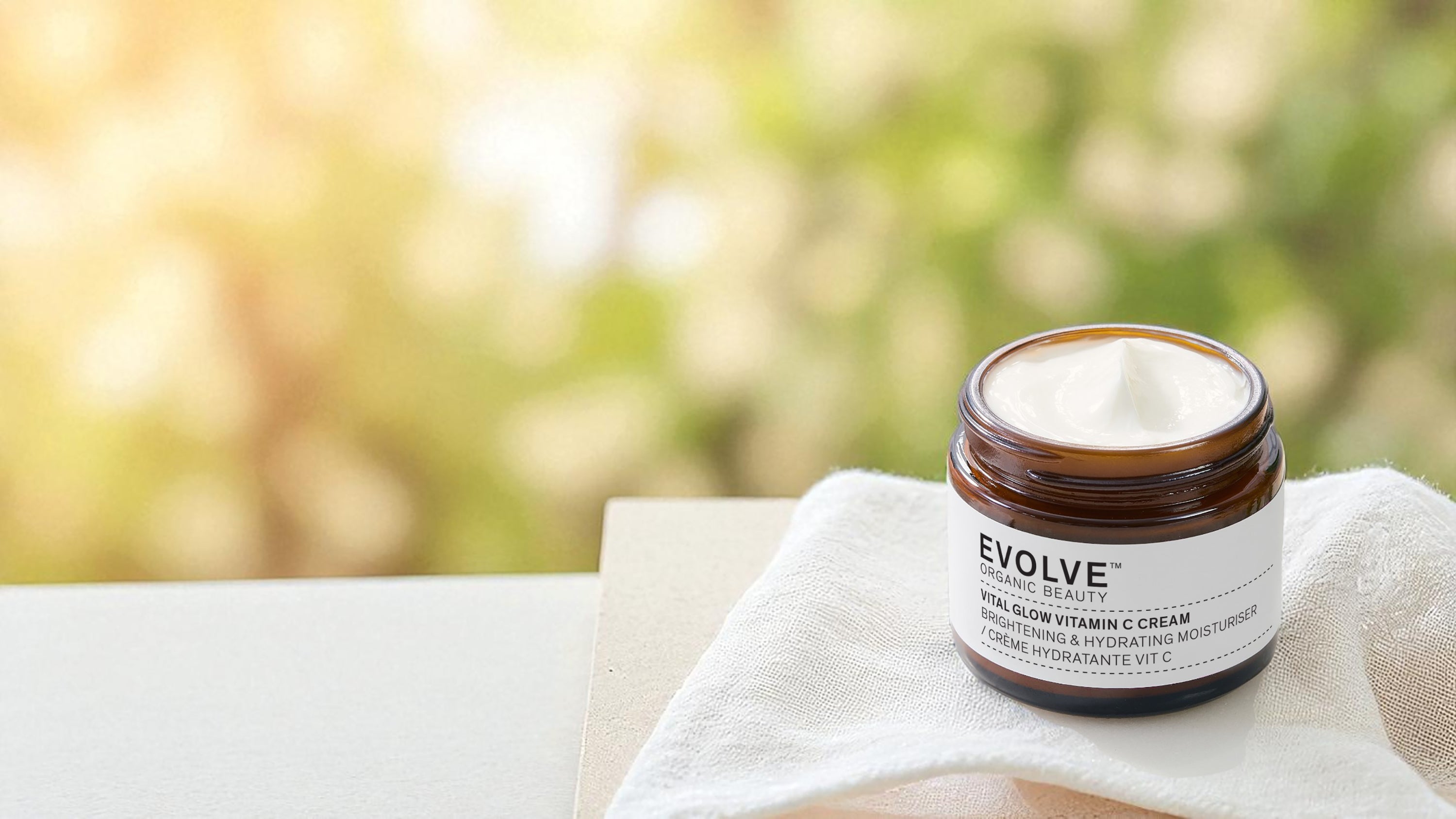
Evolve Organic Beauty's Vital Glow Vitamin C Cream uses ascorbyl glucoside as its vitamin C source, paired with CICA, maca, hyaluronic acid and rosehip oil. That combination matters because it targets both the pigment layer and the surface hydration problem in a single product, removing the need to layer a separate serum and moisturiser. The formula is 99% natural origin and is available from High Street Shoppe with shipping across Canada.

Natural remedies that don't hold up (and one that can cause real harm)
Lemon juice: photosensitising, barrier-damaging, and not worth the risk
Lemon juice is one of the most popular DIY brightening remedies and one of the most genuinely harmful for regular skin use. It is highly acidic and can cause stinging, dryness, peeling and chemical burns, particularly on a compromised barrier.
The bigger risk is phytophotodermatitis: lemon juice contains furanocoumarins that make skin photosensitive. Apply lemon juice and then go outside, and those compounds absorb into the outer skin layers, become activated by UVA light, and cause cell membrane damage, inflammation, blistering and, paradoxically, dark patches that are worse than what you started with.
The safest approach is not to apply lemon juice to skin at all. If you have already used it, apply broad-spectrum sunscreen immediately and avoid sun exposure.
Other DIY options: what the evidence actually supports
Raw papaya and citrus-based masks carry similar phototoxic risks and have weak clinical evidence for genuine pigmentation reduction. Turmeric in very small amounts, mixed into a low-irritation base, poses less risk but can cause contact dermatitis and skin staining when overused.
If you want a safe DIY mask that won't interfere with your natural skin brightening progress, the evidence points toward three low-risk options: plain Greek yogurt with raw honey, pumpkin purée with plain Greek yogurt, or ground oatmeal with yogurt. Use any of these once or twice weekly, rinse after 10 to 15 minutes, and stop immediately if you notice redness, itching or irritation.
These masks support barrier health and surface texture rather than directly targeting pigment, which makes them a useful complement to a well-formulated brightening product rather than a replacement for one.
Building a natural skin brightening routine that actually delivers over time
A simple daily approach that covers both causes of dullness
One well-formulated multi-active product used consistently outperforms four products layered inconsistently. That's the pattern that shows up when customers actually stick to a natural brightening routine long enough to see results.
Morning is the right time to apply a vitamin C cream or brightening serum, followed by SPF. Vital Glow works well here, since it covers the moisturiser step at the same time. Sunscreen is non-negotiable alongside any brightening routine because UV exposure is the primary trigger for melanin overproduction; skipping it actively undoes everything else you're doing. Gentle cleansing and consistent hydration protect the surface layer so light-reflecting actives can work on an intact, healthy base.
Why results take months, not weeks
Skin cell turnover takes roughly 28 days in younger skin and slows considerably with age. Visible pigmentation changes require multiple full cycles for surface cells to reflect what's happening in the deeper layers. Meaningful radiance improvements from botanical brightening agents typically become visible at the 8 to 12 week mark with daily use, and they often continue improving beyond that point.
This is precisely why a non-irritating formula matters: a product that causes redness or sensitivity gets abandoned long before results ever appear. Consistent, gentle daily use is what separates routines that work from routines that get replaced after three weeks.
When to see a dermatologist for persistent pigmentation
If dark spots are not responding after three to four months of consistent use, or if pigmentation appears suddenly or in unusual patterns, a dermatologist can rule out underlying causes and discuss prescription-level options. Natural skin brightening ingredients are effective for many types of uneven tone, but they have limitations, and there is no benefit to waiting indefinitely when professional assessment is available.
The bottom line on natural skin brightening
Restoring radiance is not about changing your skin colour. It's about solving two separate problems at once: patchy pigmentation and a dehydrated surface that can't reflect light properly. Every product you consider is worth evaluating through that lens. Does it address both problems, or just one?
The natural skin brightening ingredients with real evidence behind them are vitamin C in a stable form, niacinamide, liquorice root, CICA and rosehip oil. They work best when combined in a well-formulated product rather than applied separately.
No natural brightening ingredient delivers visible results in two weeks. The products that actually work are the ones gentle enough to use every day for months without causing the irritation that kills consistency.
High Street Shoppe is Canada's destination for COSMOS Organic certified brightening products that meet that standard, including the Evolve Vital Glow Vitamin C Cream and a wider range of formulas built around evidence-backed botanical actives. If you're ready to solve both sides of the dullness problem with a natural skin brightening routine that holds up over time, that's a good place to start.
Frequently asked questions
How long does natural skin brightening take to work?
Expect 8 to 12 weeks of daily use before you see meaningful change, and continued improvement beyond that. Skin cell turnover takes roughly 28 days and slows with age, so pigment changes in the deeper layers need several full cycles before they reach the surface. Anything promising visible results in two weeks is describing hydration, not pigment.
Is vitamin C or niacinamide better for uneven skin tone?
They work through different mechanisms and are more useful together than ranked against each other. Vitamin C is an antioxidant that supports collagen and works on melanin production. Niacinamide interrupts the transfer of pigment between cells. If you have reactive skin, niacinamide is the gentler starting point. If you want the most studied option, vitamin C in a stable form has the deepest research behind it.
Can you use vitamin C and niacinamide in the same routine?
Yes. The idea that they cancel each other out comes from research on unstable formulations under high heat, and it does not reflect how modern products behave on skin. They are compatible in the same routine and in the same product.
Does natural skin brightening lighten your natural skin colour?
No. Brightening restores radiance to dull, uneven skin by addressing surface hydration and patchy pigment. It does not alter your baseline tone, and products that claim to do that are a different category with real safety concerns attached.
Do I need sunscreen if I'm using brightening products?
Yes, and it matters more than the brightening product itself. UV exposure is the primary trigger for melanin overproduction, so skipping sunscreen undoes the work everything else is doing. Broad spectrum, applied every morning, is the single highest-impact step in a brightening routine.
Why did my vitamin C serum stop working?
It most likely oxidised. L-ascorbic acid degrades quickly on exposure to air and light, which is why serums turn orange over time. Once that happens, the active has already broken down. Stabilised forms like ascorbyl glucoside resist this and stay active for the life of the product.
Is vitamin C safe for sensitive skin?
It depends entirely on the form. L-ascorbic acid needs a low pH to stay active, and that acidity is what causes stinging. Derivatives formulated at a gentler pH are far better tolerated. If your skin is reactive, patch test on the inner arm for 24 to 48 hours before applying anything new to your face.
Can I use a brightening product while pregnant or breastfeeding?
Vitamin C, niacinamide and CICA are generally considered suitable, but rosehip oil contains naturally occurring vitamin A and some practitioners advise caution with retinoid-adjacent ingredients during pregnancy. Check with your midwife, physician or pharmacist about your specific product rather than relying on general guidance.